Research to business shift: Why structural changes occur
"The transition from a laboratory to a marketplace requires a fundamental shift in how an organization values its own output. Balancing the pursuit of pure discovery with the necessity of profitable application defines the modern trajectory of high-tech firms."
Navigating the transition from a research-driven entity to a commercially successful enterprise requires careful structural realignment.

This guide explores the challenges of scaling innovation, the necessity of shifting focus from discovery to deployment, and the inherent friction between long-term R&D and immediate market demands.
How does the research to business shift affect organizational culture?
In the quiet office at midnight, the founder rubs tired eyes while staring at a spreadsheet that threatens to derail their original research.
A scientist peers through a microscope, focused entirely on a single variable, while a manager looks at a spreadsheet of quarterly targets. This tension characterizes the research to business shift that occurs when a lab-based startup attempts to scale.
In a research-heavy environment, success is measured by breakthroughs and peer recognition. However, as the organization evolves, metrics must shift toward product reliability and user adoption. This change often creates friction between the original founding team and new commercial leadership.
The tech commercialization path requires a dual-track approach where fundamental research continues to feed the product pipeline. Without this, the company risks becoming a stagnant utility rather than an innovator.
- Transition from academic inquiry to market-driven objectives.
- Shift from individual authorship to collaborative team accountability.
- Integration of commercial viability into the research lifecycle.
Why is the lab to market transition difficult for deep tech?
An engineer adjusts a prototype in a cleanroom, knowing that the current iteration is far from being consumer-ready. This reality defines the lab to market transition, where the gap between a functional proof-of-concept and a scalable product can be vast.
Deep technology often requires massive upfront investment before a single dollar of revenue is generated. Managing the burn rate while maintaining the pace of innovation is a primary challenge for leadership teams.
The R&D to profit model necessitates a clear understanding of how much research can be "productized" without losing its core value. If the focus shifts too quickly, the company loses its competitive edge.

In this sequence, the first step is the most complex.
What will stop our AI innovations from scaling?
A developer stares at a server rack, calculating the compute power needed to train a new model. These innovation scaling challenges arise when the complexity of the technology meets the reality of resource constraints.
Scaling requires moving from bespoke, hand-crafted solutions to automated, repeatable processes. This transition often demands a complete overhaul of the internal data infrastructure and talent acquisition strategies.
Balancing pure research goals with the need for stable, deployable software is a constant struggle. Companies must decide when a model is "good enough" for the market versus when it requires further refinement.
How do companies manage the monetization of deep technology?
A salesperson demonstrates a software interface to a client, emphasizing ease of use over the underlying complexity. This is the essence of monetizing deep technology, where the value must be translated into tangible business outcomes for the customer.
To succeed, companies must build bridges between their technical breakthroughs and the practical needs of the industry. This often involves creating specialized teams to handle customer integration and support.
The complexity of the technology can sometimes be a barrier to sales. Success depends on making the "black box" of research accessible and useful to the end-user.
How will our structure change as we grow?
An executive reviews a new organizational chart, noting the addition of marketing and sales departments. Structural changes in growth often involve the creation of silos between the research teams and the commercial teams.
As the company grows, the specialized roles required for commercialization—such as product management and customer success—must be integrated into the existing hierarchy. This can lead to a perceived loss of autonomy for the original researchers.
Effective leadership ensures that the research arm remains insulated enough to innovate but connected enough to inform the product roadmap.
Can a company maintain its identity while scaling?

A founder walks through a large, modern office, reflecting on the small garage where the company began. Maintaining an identity during growth is a delicate balancing act.
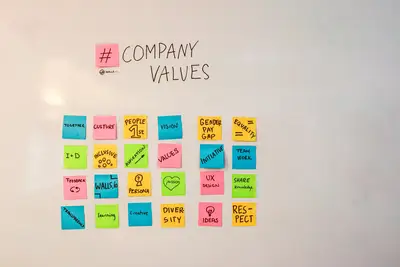
The company must decide which core values are non-negotiable and which must evolve to survive in a competitive market. If the identity is too tied to pure research, the company may fail to become profitable.
If the identity is too tied to commercial success, the company may lose the innovative spirit that made it successful in the first place.
Balancing pure research goals
Related
- AI global expansion strategy: How to navigate market entry
- AI traffic market power: Tips for measuring user trends
What cautions surround the laboratory to market transition?
Navigating the laboratory to market transition demands vigilance regarding the scope of initial research. A caution exists that the pursuit of absolute scientific perfection can delay necessary commercial viability.
Leaders must recognize when a proof-of-concept achieves sufficient functionality for initial market testing. The risk involves over-engineering the solution before market feedback can guide refinement.
When the transition occurs, the organizational culture faces the condition of conflicting priorities. Researchers prioritize depth of knowledge, whereas market teams prioritize breadth of immediate utility.
This divergence necessitates established protocols for knowledge transfer between the two groups. Ignoring this cultural gap impedes the entire transition process.
Furthermore, the financial aspect of the laboratory to market transition presents a specific condition. Sustaining high-level research while simultaneously building market-ready infrastructure requires disciplined financial forecasting.
Leaders must anticipate the capital drain associated with scaling from a small laboratory setup to a production environment.






Comments 0